Overview of Forensic Ballistics
Ballistics is the applied science concerned with the motion of projectiles – especially those projectiles that are used in ranged weaponry. In this course, we are especially concerned with the applications of this science towards the law. Specifically, as the title of the course suggests, we will be focusing on Forensic Ballistics in this course.
The word “ballistics” originated from the Greek word “ballein” or “ballo.” It means “to throw“. If you watch movies set in the Ancient Roman era, you might be familiar with this weapon of war:
 (By Pearson Scott Foresman – Archives of Pearson Scott Foresman, donated to the Wikimedia Foundation, Public Domain, https://commons.wikimedia.org/w/index.php?curid=35499962)
This is called a ballista and the name is another origin word for ballistics. This weapon usually comes in the form of a gigantic bow or catapult and is used to hurl large objects, particularly stones, at animals or enemy forces.
While the term “ballistics” generally refers to the study of the trajectory of projectiles, the science itself was developed to facilitate the examination of firearms, ammunition, and related objects.
The phrase forensic ballistics was first coined by Col. Calvin Goddard, named the Father of Modern Ballistics. He was a forensic scientist, army officer and academic researcher who was a pioneer in the field.
Forensic Ballistics deals with the use of firearms science as applied to the law. Therefore, it is necessary for anyone interested in becoming a law enforcer to understand the science.
Challenges Faced by Forensic Ballistics
Forensic ballistics, like most other sciences, face issues and problems in its execution. Some of them are the following:
- Limited Evidence In most cases involving firearms, only spent bullets, cartridge cases, or gunshot residue may be available as evidence, making it difficult to determine the exact firearm used or the shooter’s identity.
- Lack of Standardization Standardized testing procedures and databases can sometimes not be available, thus hindering the comparison of ballistic evidence across different jurisdictions.
- Evolving Technology Advances in firearms and ammunitions technology can make it challenging for forensic experts to keep up with new firearm models and their unique characteristics.
- Human Error Human bias and subjective judgement can influence forensic ballistics analysis, potentially leading to incorrect conclusions.
- Limited Resources Many forensic laboratories have limited resources, which can lead to delays in processing ballistic evidence and backlogs in cases.
- Lack of Training and Expertise Not all forensic laboratories have access to experienced and well-trained firearms examiners, which can impact the quality of analyses.
- Chain of Custody Issues Proper handling and preservation of ballistic evidence are crucial, and any break in the chain of custody can compromise its integrity.
- Ethical Concerns The potential for misuse of forensic ballistics analysis, such as wrongful convictions, raises ethical questions about its application.
History of Forensic Ballistics
The history of forensic ballistics begins in the 1493 – 1508 period when Harold Peterson, in a book, discusses firearm riflings with Emperor Maximillian of Germany. This is the earliest known reference to any manner of analysis when it comes to firearms. The value of rifling was not recognized until the late 19th century.
Around 1835 – 1899, certain techniques were developed, including simple observation, physical matching, caliber determination from an examination of the shape and size of a projectile, and experimentation, that would ultimately be associated with the field of forensic ballistics.
During 1900 – 1930, the science gained recognition from several judicial systems around the world due to particular events where it become most helpful.
In 1929, the St. Valentine’s Day Massacre occurred. This was an incident related to gangster violence and happened in Chicago in the USA. The investigations done in the aftermath of the event bolstered the reputation of firearm identification techniques.
During the 1930 – 1970 period, more events occurred that moved forensic ballistics forward.
In the United States, the Scientific Crime Detection Laboratory (SCDL) began operations at Northwestern University in late 1929 or early 1930.
In 1932, the Federal Bureau of Identification Laboratory was formed. Similar laboratories were also created all over the world as the science continued to evolve during the period.
Meanwhile, the Bureau of Forensic Ballistics was established by Charles E. Waite, Maj. (later Col.) Calvin H. Goddard, Phillip O. Gravelle, and John H. Fisler in New York, New York in 1935.
Then, the Association of Firearm and Toolmark Examiners (AFTE) was organized in Chicago, IL in February 1969.
During 1970 – 1999, The evolution of forensic ballistics continued along with significant growth in the number of scientists being employed in the field. New tools coming from various technological advancements of the era, including computers and the binocular comparison microscope, markedly contributed to the evolutionary changes happening in the field.
Relevant Personalities
Forensic Ballistics

Col. Calvin H. Goddard Father of Modern Ballistics Invented comparison microscope and helixometer
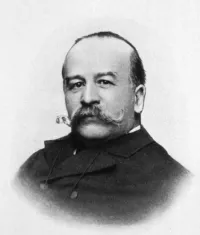
Alexander Lacassagne He was the first to recognize the significance of striations etched on a bullet extracted from a murder victim and its link to the gun from which it was fired, thus beginning the science of ballistics.
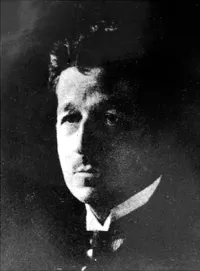
Edmond Locard He was a French criminologist who became known as the “Sherlock Holmes of France” and formulated the basic principle of forensic science: Every contact leaves a trace.
Firearms
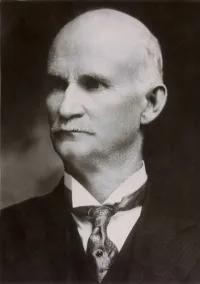
John M. Browning Wizard of Modern Firearms Pioneered the breech-loading single-shot rifle that was later adapted by Winchester
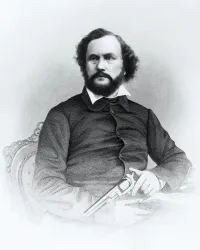
Samuel Colt Produced the first practical revolver, the Colt Peace Maker, one of the most famous revolvers
Henry Derringer Manufacturer of rocket pistol
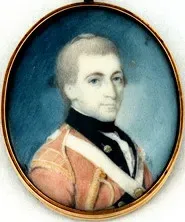
Maj. Patrick Ferguson Designed the “Ferguson” rifle
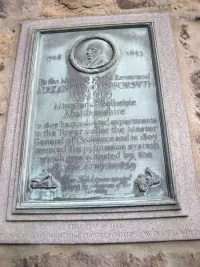
Alexander John Forsyth Father of Percussion Powder Invented the percussion system of ignition
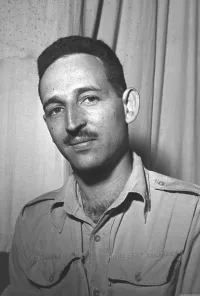
Maj. Uziel Gal Israeli army officer who designed the UZI in 1950
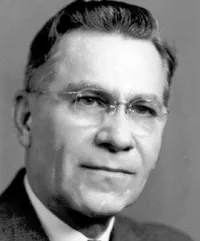
John C. Garand Designed and invented the semi-automatic US Rifle Cal. 30 M1 Garand
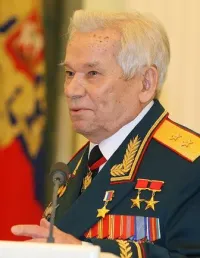
Mikhail Kalashnikov Designed the AK-47 (Automat Kalashnikova) that was used by the Russian army in 1951
John Mahlon Marlin Founder of Marlin Firearms Company Famous for Marlin Cal. 22 Carbine
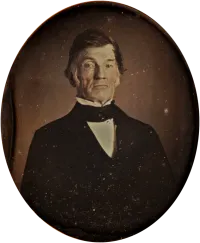
Eliphalet Remington One of the first rifle makers
Benjamin Robins One of the first to state sound ballistics theories
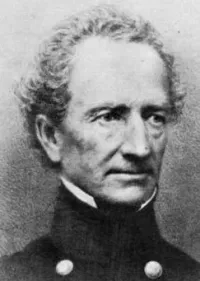
James Wolfe Ripley Stimulated the development of the Model 1055 rifled musket
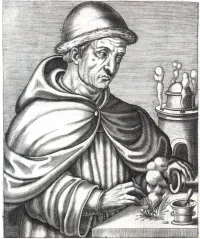
Berthold Schwarz
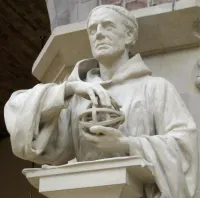
Roger Bacon They are credited to have invented the first gunpowder.
Elisha King Root Helped Samuel Colt synthesize the manufacture of firearms
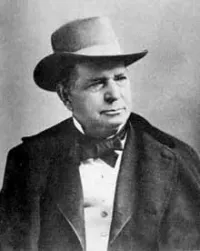
Oliver Fisher Winchester One of the earliest rifle and pistol makers Manufactured the Winchester repeating rifle
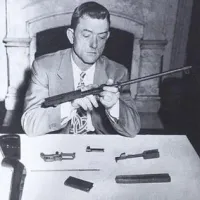
David “Carbine” Williams Maker of the first known carbines
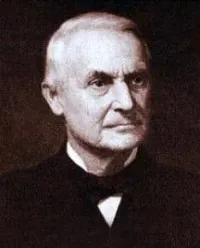
Horace Smith Founded Smith & Wesson Pioneered the making of breech-loading rifle
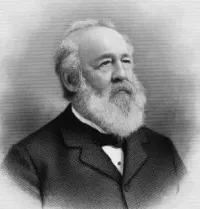
Daniel Baird Wesson Partner of Horace Smith in revolver making
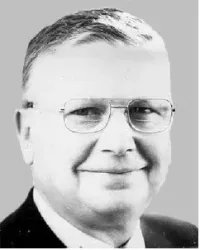
Eugene Stoner Deisgned the US M16 Armalite (AR15) under license by the Colt Company from July 1953 onwards
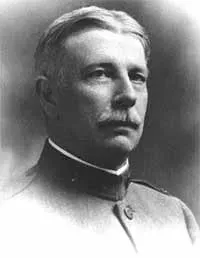
John T. Thompson Maker of the Thompson submachine gun – the first hand-held machine gun
Melvin M. Johnson, Jr. Invented the Johnson Model 1941 rifle – one of the most innovative rifles of its time period

Carl Walther Developed small caliber pistol in 1866
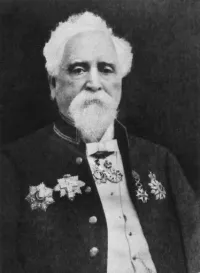
Hiram Stevens Maxim Inventor of the Maxim Machine Gun and the Maxim Silencer
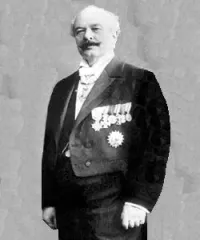
Georg Luger Did lasting design work in connection with the 9mm parabellum cartridge
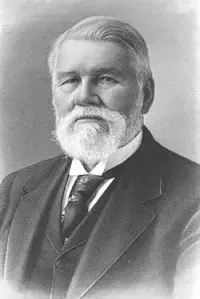
Dr. Richard Gatling Patented the Gatling Gun – six-barreled, hand-cranked weapon that can fire up to 200 rounds/minute
Branches of Ballistics
Interior Ballistics
This branch of ballistics studies the motion of projectiles while they are still inside the firearm.
Bullets, and other ammunition, are affected by interior ballistics over a very short period. In a modern rifle, it only takes about 0.01 seconds from when the firing pin is hit to when the bullet leaves the muzzle.
These are the events that happen inside the firearm when the trigger is pulled:
- firing pin hits the primer
- primer ignites
- flames are produced
- gunpowder combusts
- heated gas expands
- pressure develops
- energy is generated
- bullet fires
- recoil occurs
Recoil is defined as the equal and opposite reaction of the gun against the forward movement of the bullet. Jump is a related term that names a part of recoil. Specifically, the jump is characterized as the backward and upward movement of the gun that takes place before the bullet leaves the muzzle.
Interior ballistics studies each of these steps of the movement of the bullet along with its velocity and rotation. Additionally, engravings on the cylindrical surface of bullets are also studied
Special Notes
Benjamin Robins, mentioned in the previous lesson, conducted many experiments in interior ballistics. His findings earned him the tile of “father of modern gunnery.”
Benjamin Thompson made the first attempt to measure the pressure generated by gunpowder late in the 18th century.
Exterior Ballistics
This branch of ballistics studies the motion of projectiles from the moment they leave firearms to the moment before impact. Most bullets today do not fly for more than 30 seconds at maximum range.
Related Terms
- muzzle blast the noise created at the muzzle point of a gun
- muzzle energy this refers to the energy generated at the muzzle point
- trajectory path taken by a projectile in flight
- range imaginary straight distance between the muzzle of a gun and the target
- accurate range the distance within which the shooter or gunner has control of his shots
- effective range the distance within which a fired bullet is capable of inflicting fatal injury
- maximum range the furthest distance a bullet can travel
- velocity speed and direction of the bullet
Terminal Ballistics
This branch of ballistics studies the effects of projectiles on the target. Of prime interest to sportsmen and the military is the penetration of the projectile as it helps in determining safety requirements.
Important Terms
- terminal accuracy size of the bullet grouping on the target
- terminal energy / striking energy the force of the projectile when it strikes the target
- terminal velocity the speed of the projectile upon hitting the target
- terminal penetration depth of entry of the bullet upon striking the target
Forensic Ballistics
This refers to the application of ballistics to the law. The word “forensic” is derived from the Latin word “forum” which refers to a marketplace where people gather to discourse. When used with a field of science, such as ballistics, it suggests a relationship to the courts of justice or legal proceedings.
Scope
- field investigation
- technical examination of exhibits
- legal proceedings